Every last Saturday in June marks the celebration of Armed Forces Day which this year fell on the 29th of June. The day marks a chance for people to show their support for the men and women of the Armed Forces Community: from personnel currently serving, to service families and cadets.
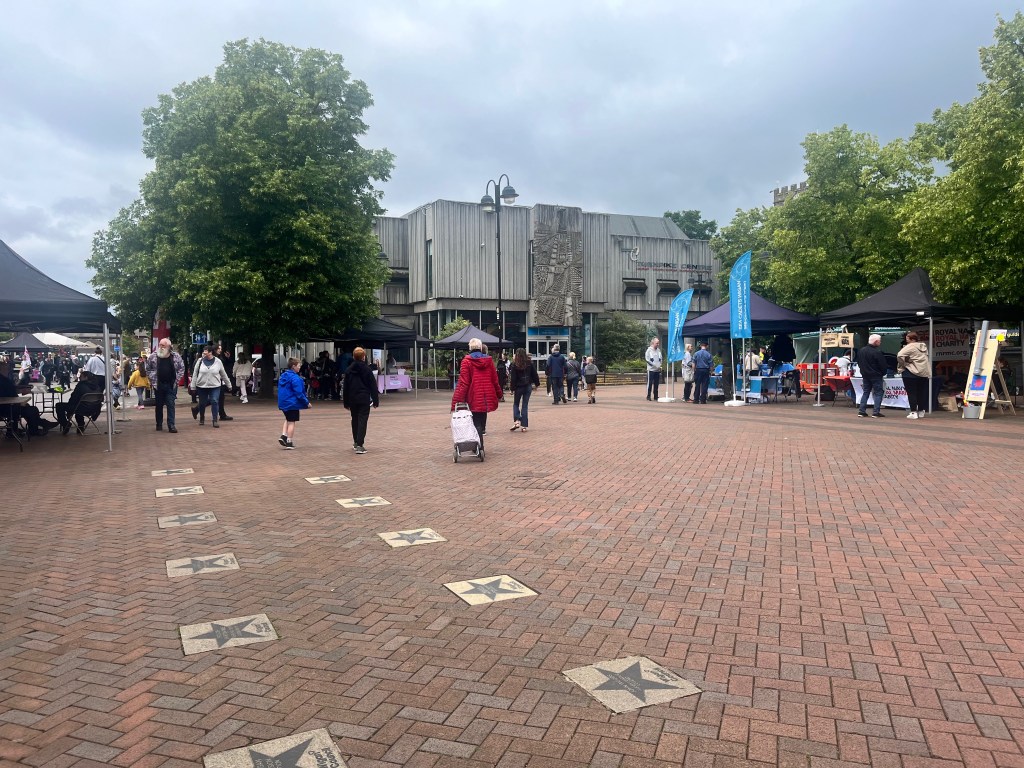
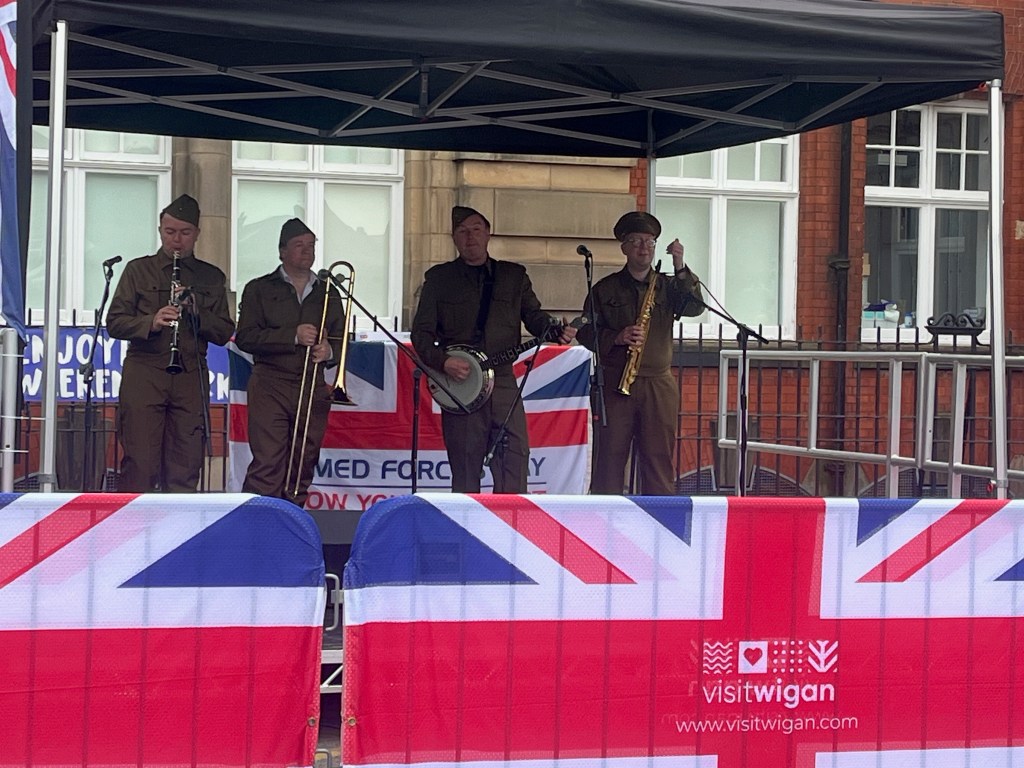
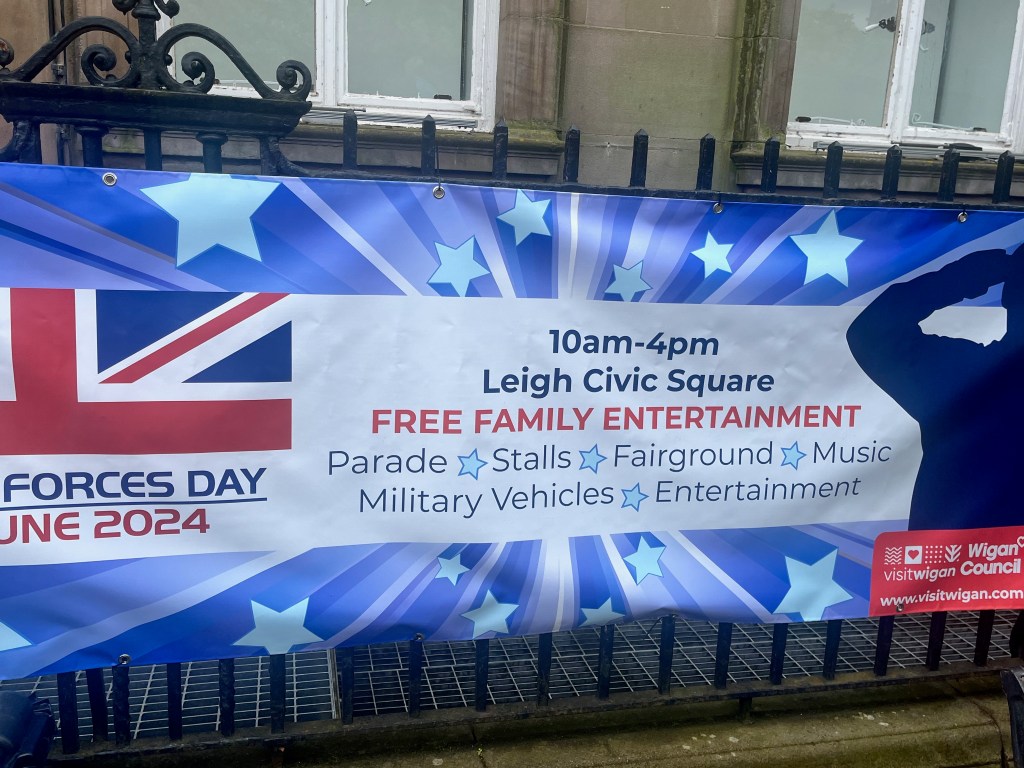
Wigan and Leigh Armed Forces Day was celebrated by Wigan Council holding an Armed Forces-themed programme on Leigh Civic Square. The program included a town centre military parade procession, military displays, vintage vehicles, themed stalls and crafts and a range of family-friendly stage performances and attractions.
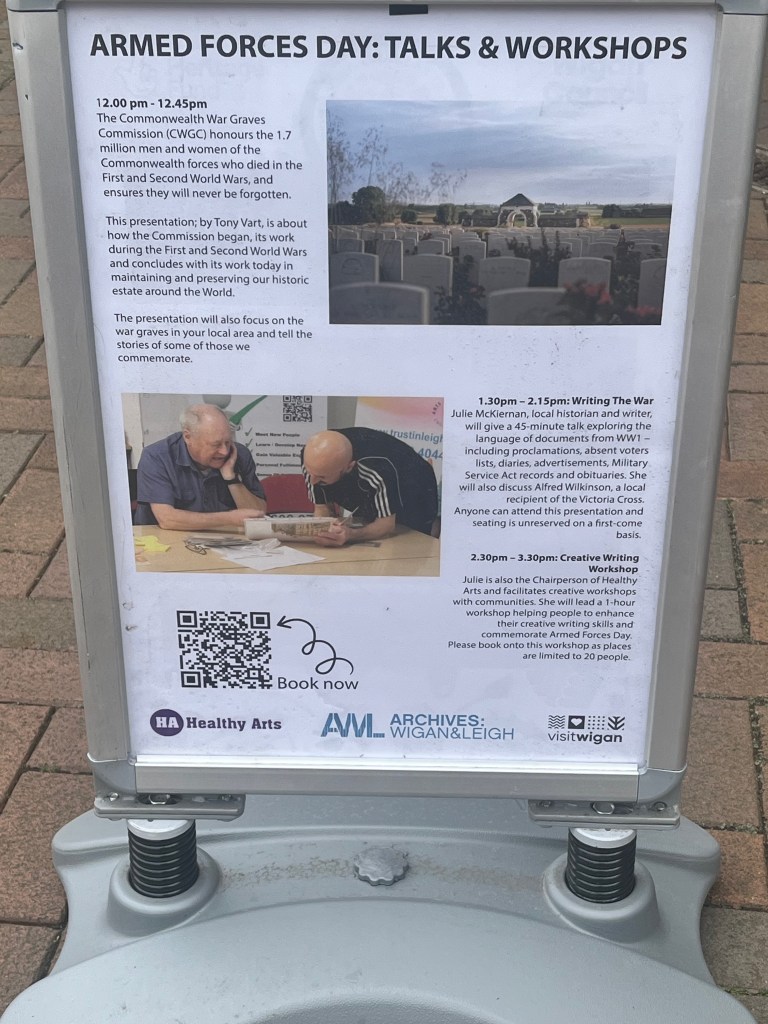
I decided to attend a special Armed Forces Day workshop led by Julie McKiernan, a local writer and historian, focused on exploring the language of documents from WW1. The workshop was held in conjunction with Healthy Arts and Wigan and Leigh Archives. Healthy Arts is a local non-profit organisation that aims to improve people’s lives through engagement with arts and heritage. By working with local community groups and individuals, the organisation runs workshops like “Writing the War,” providing people with the opportunity to learn about our Armed Forces’ past and engage with local heritage, history, and the arts. This workshop was a meaningful way to honour the contributions of our Armed Forces on Armed Forces day.
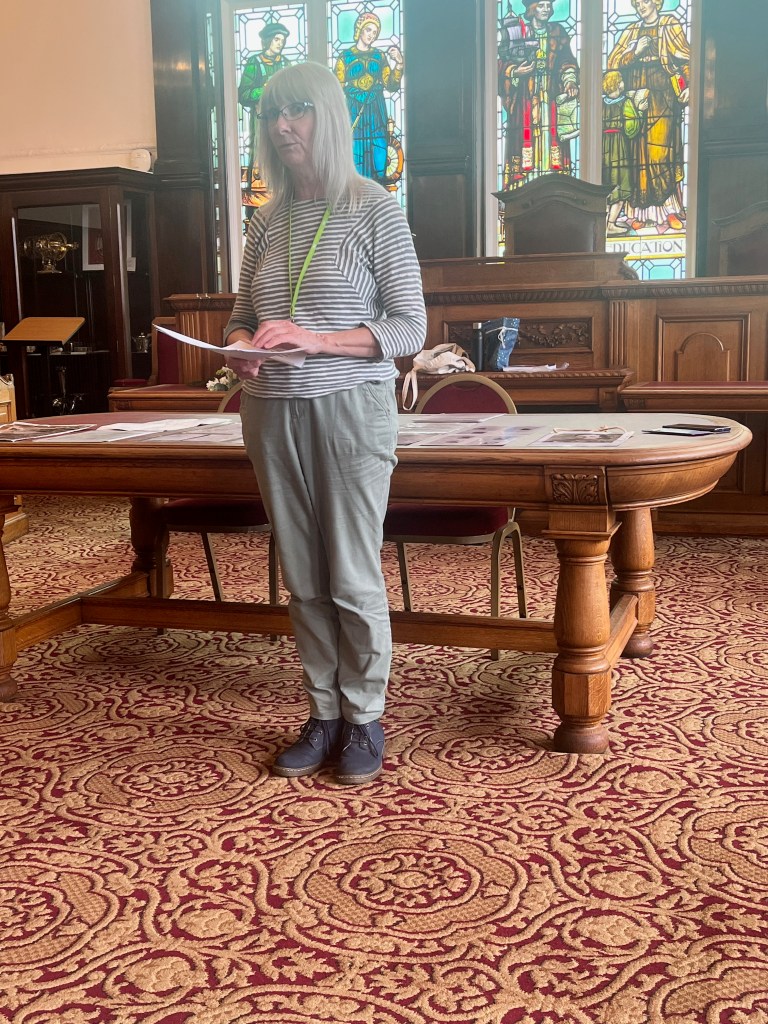
Julie gave a 45-minute talk as part of the workshop in which we explored a range of documents from the First World War and the language they used. The documents we explored included proclamations, absent voters lists, diaries, advertisements, Military Service Act Records and obituaries. Julie also explored the life of local solider Alfred Wilkinson who was a recipient of the Victoria Cross.
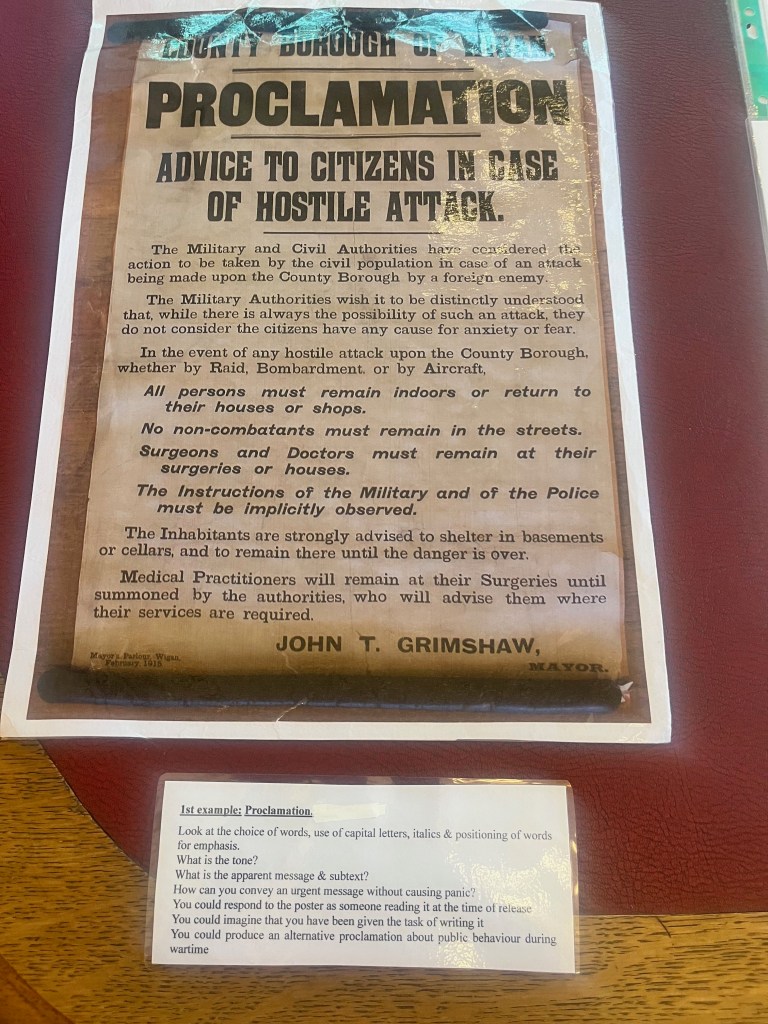
The photo above shows a proclamation issued in the County Borough of Wigan by the government to “advise citizens in case of hostile attack.” Despite the Military Authorities’ acknowledgment of a possible attack, they emphasised not wanting to “cause any anxiety or fear.” Julie highlighted how difficult it is for us today to imagine encountering such a declaration in a public space during a time of urgency. Although the document was intended to warn the public, we discussed how its strong language could also have the opposite effect. We noted how many of us, if we saw such a document during the war, would feel a sense of terror.
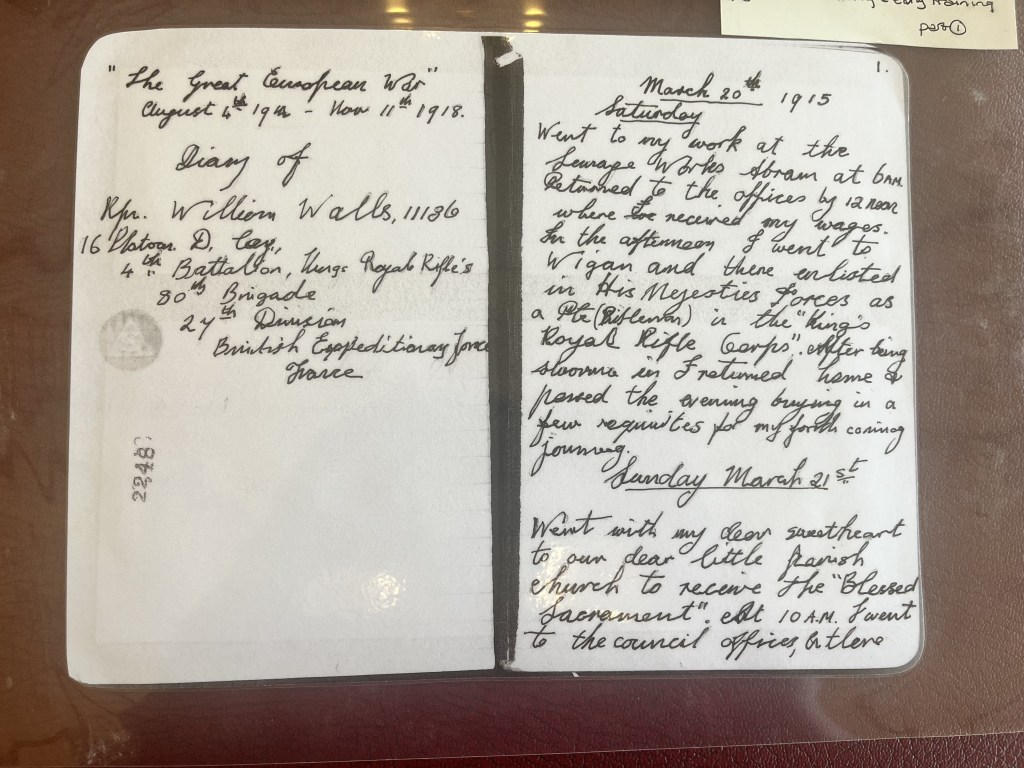
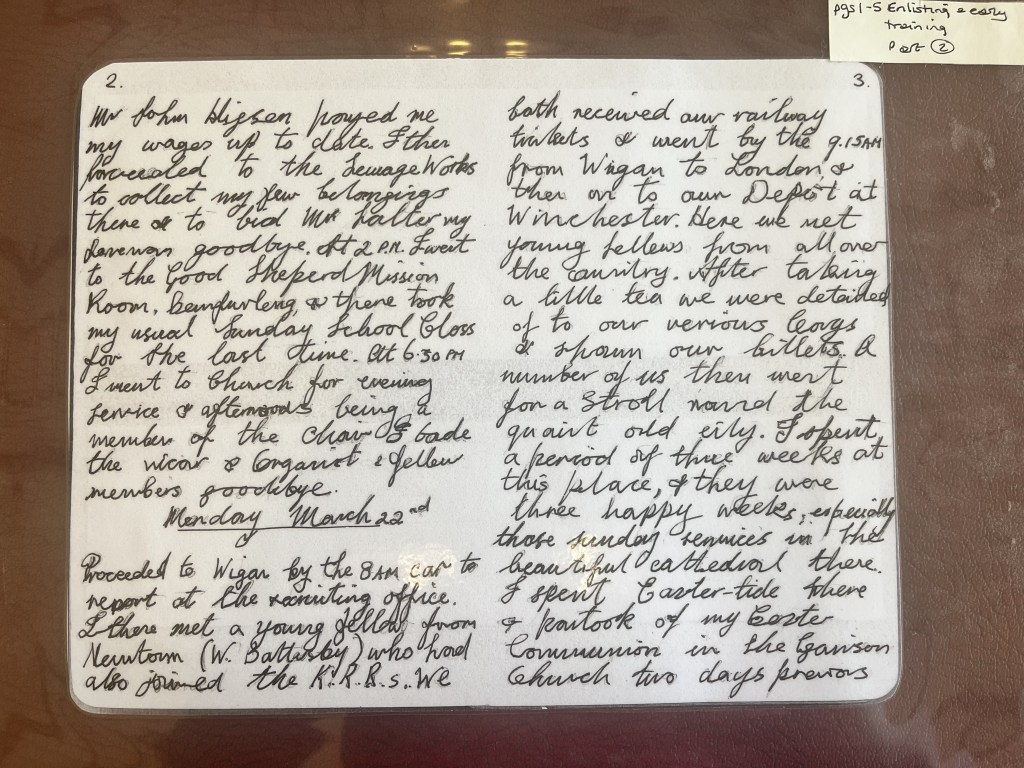
We also looked at personal documents from the First World War such as diaries from those who served. William Walls a private in the Army diary has been transcribed by Archives volunteer Susan Berry which includes two volumes covering his wartime career between March 1915 and February 1919.
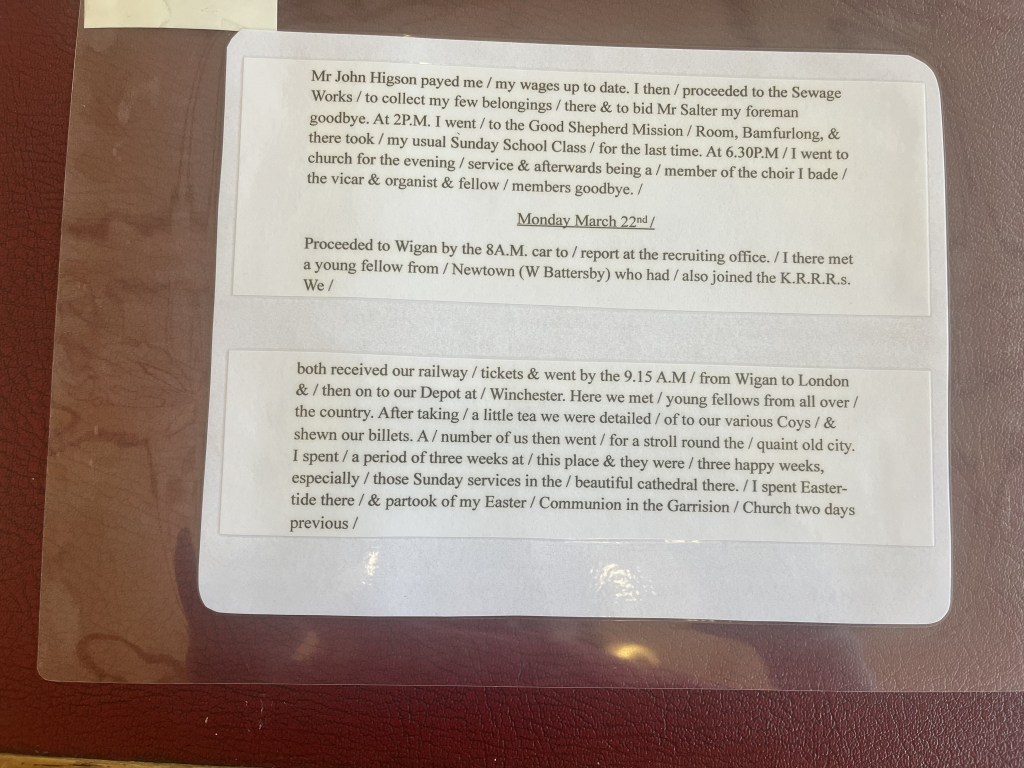
His early entries revealed the sense of duty many soldiers felt during the early days of the war. In March 1915, Walls detailed his decision to sign up to fight for King and country. On March 20, 1915, Walls noted how his boss, Mr. John Higson, paid him his wages, and how he then went to the sewage works to collect his belongings. That evening, at 6:30 PM, he attended church for the evening service and bid farewell to “the vicar, the organist, and fellow choir members.”
Two days later, on March 22, 1915, Walls explained how he received his railway tickets and “went by the 9:15 AM from Wigan to London and then to our Depot at Winchester.” Walls described how there were “young fellows from all over,” and how they went for “a little tea” and “a stroll around the quaint city” before being shown their “billets.” His diary paints a picture of the promises soldiers were told about the war, with many believing it would be over by Christmas.
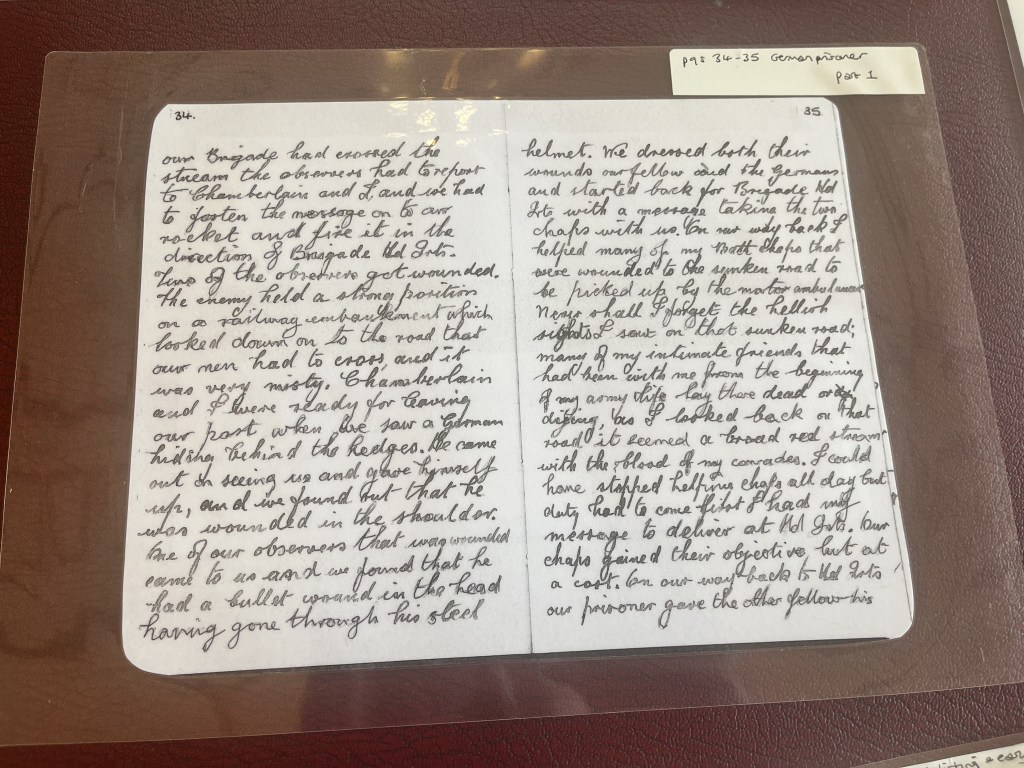
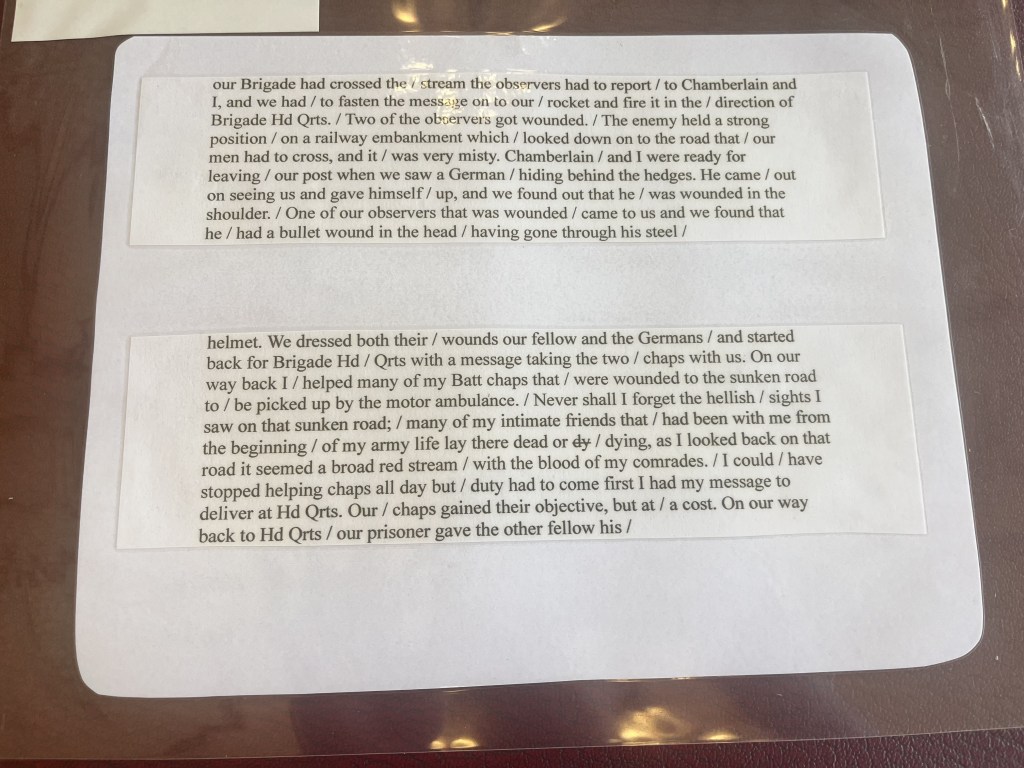
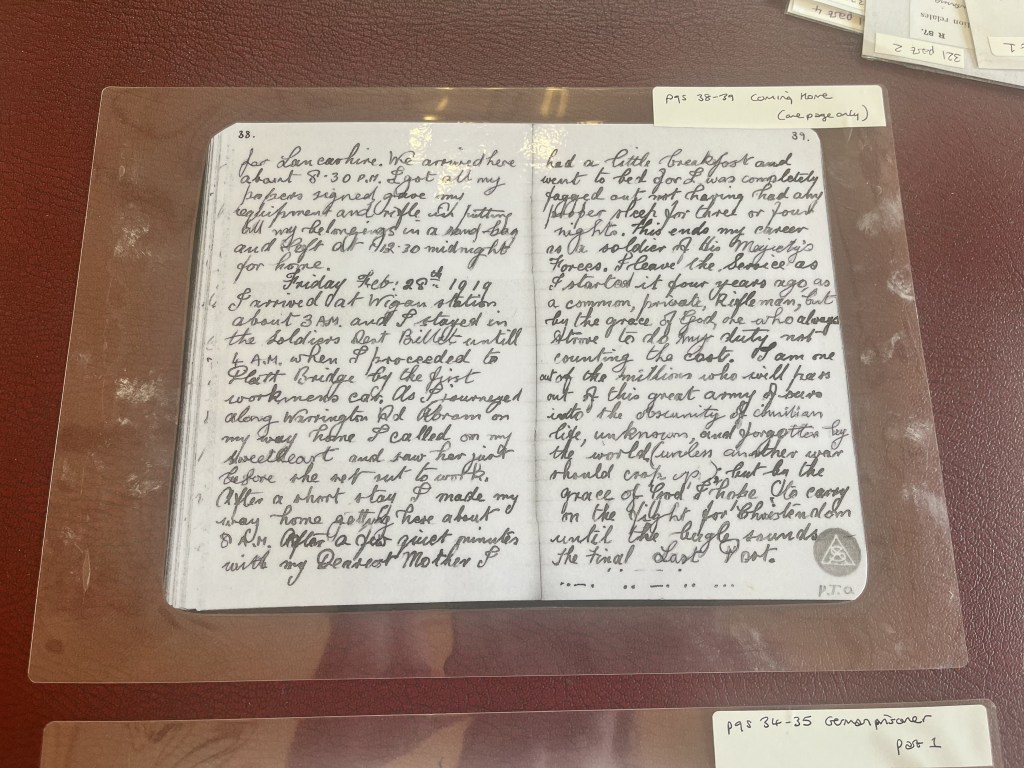
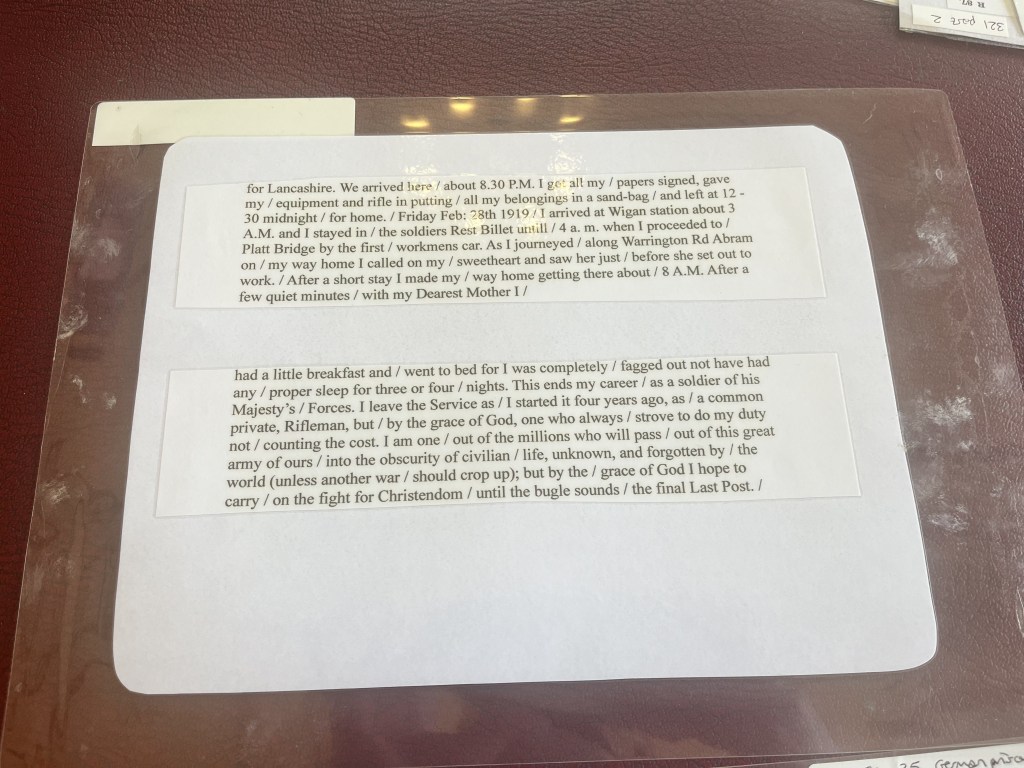
However, the later accounts in Walls’s diary reveal the horrors of the trenches and battlefield. Despite Germany being the enemy, Walls’s humanity shines through in his account of aiding a wounded German soldier. He described coming upon a soldier with a “bullet wound in the head that had gone through his steel helmet” and how he and his fellow soldiers dressed the wounds of both “our fellow and the Germans.” Walls saw it as his duty to serve in the war but never forgot the cost, recalling the “hellish sights” he saw. Yet, he never regretted the sacrifice he made. Even today, we owe thanks to those who gave their lives or served during the Great War. His words resonate with many soldiers’ experiences: “I started four years ago as a common Private Rifleman, but by the Grace of God, one who always continues to do my duty.”
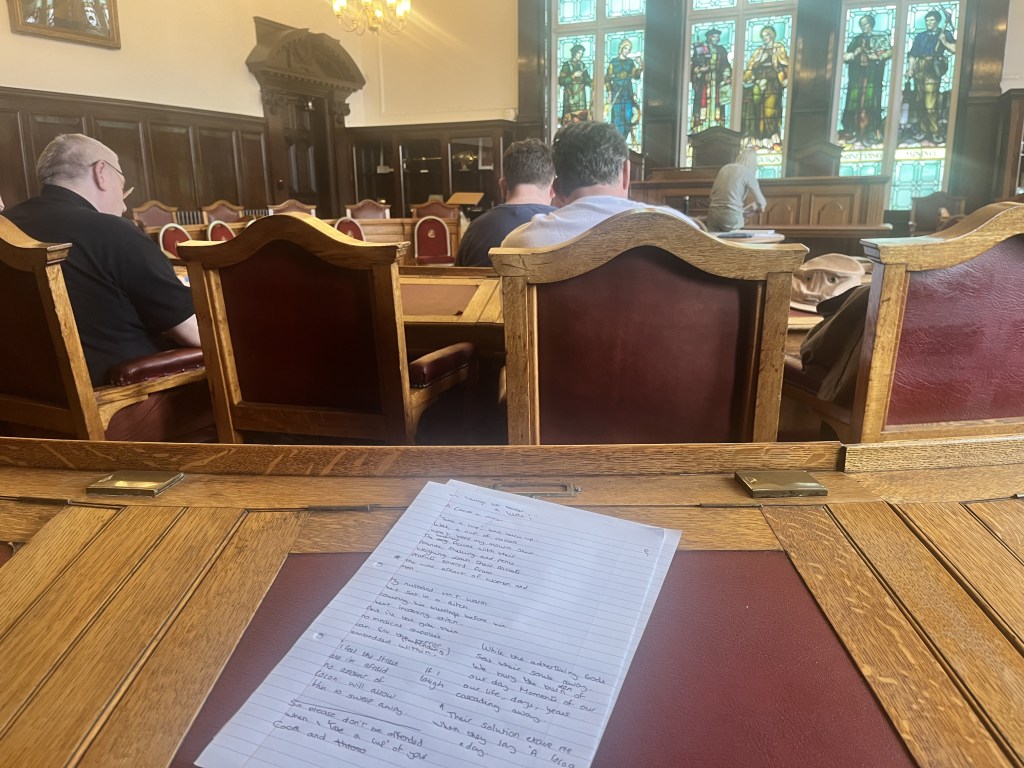
As part of the session Julie ran Creative Writing Workshop after her talk and tasked us with creating a written piece inspired by documents from the war. Some people choose to write accounts from a solider’s perspective influenced by the diary entries we had heard whilst others created their own war poems. However, I myself decided to write a poem inspired from the advertisement campaigns of the war period especially directed towards the women who worked within the war effort.
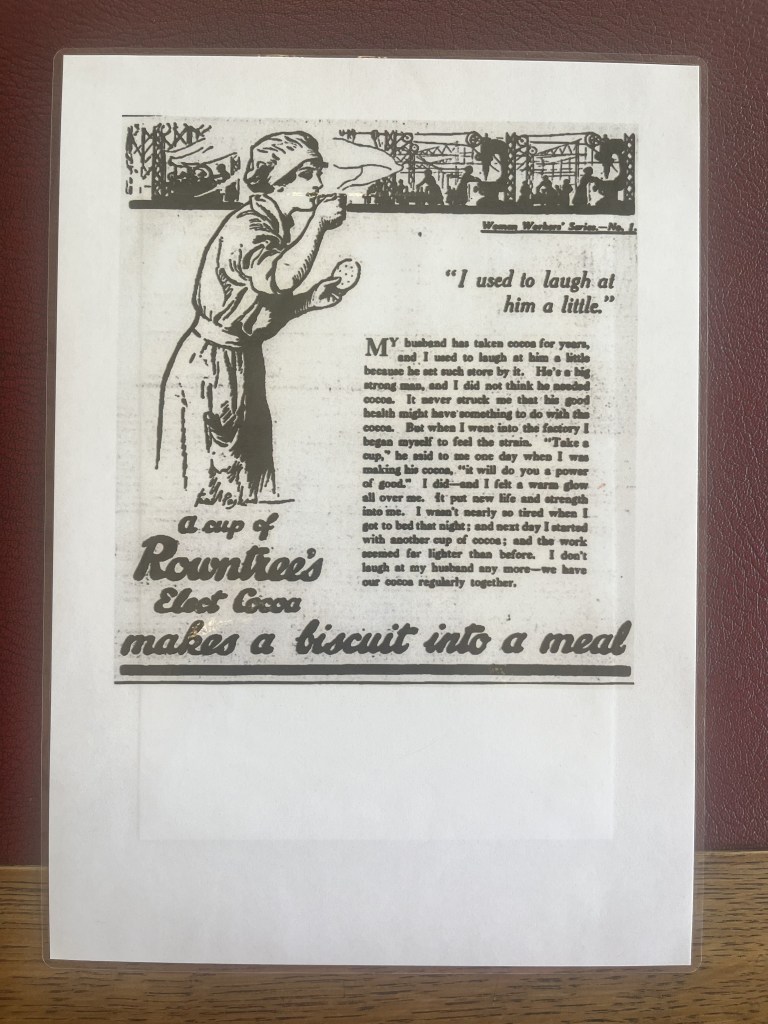
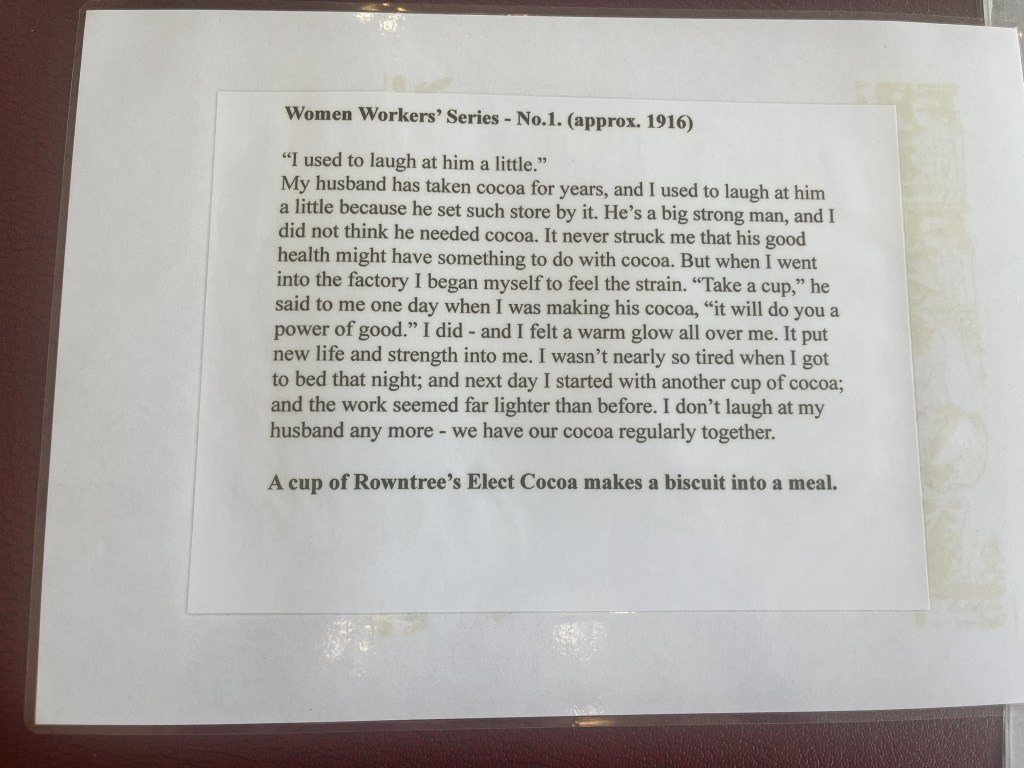
An advertisement from the war by Rowntree claims that their Elect Cocoa can “make a biscuit into a meal.” The advert details the benefits of cocoa to the war effort, creating a fictional account of a woman who attributes her husband’s good health in the trenches to cocoa. The woman also claims that she feels a “warm glow all over her,” which relieves the strain from her work in the munitions factories. The advert stresses that in the dire times of war, it is essential to “take a cup” of cocoa.
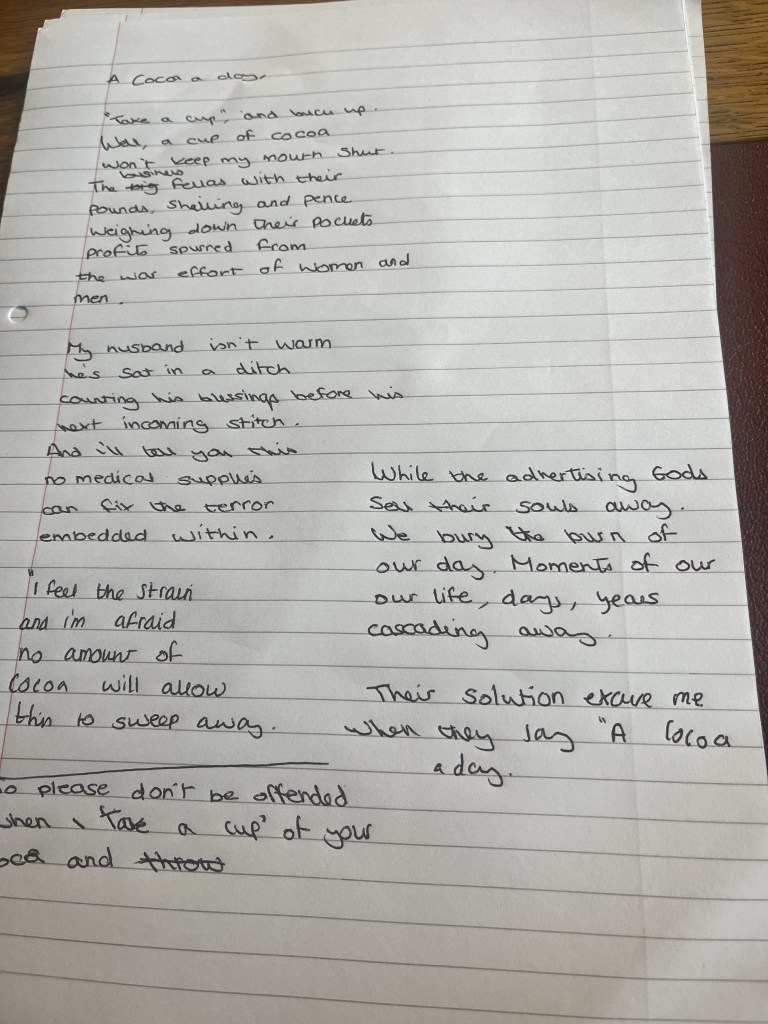
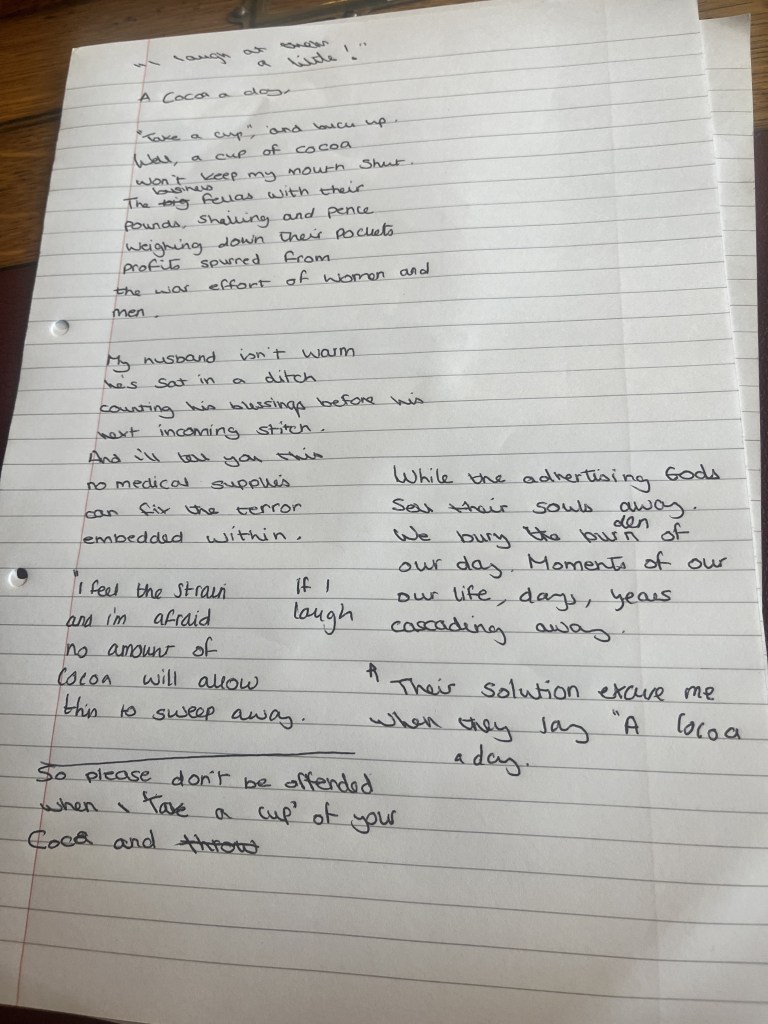
Even reading the advert once was enough to annoy me, seeing how advertisers could exploit the sacrifices made by men and women during the war. The phrase “Take a cup” struck me as patronising and meaningless. As a result, my poem adopted a female perspective, highlighting the experience of seeing her loved ones fighting abroad while also working hard on the home front. I imagined feeling angry, to put it lightly, at such advertisements, so I decided to write a sarcastic response to the advertisers. One of my favourite lines is, “I won’t take a cup” and “shut up.”
Julie’s workshop allowed us to understand more about those who bravely fought in the war and learn more about their stories. The writing workshop, in conjunction with her talk, enabled us to engage with what we learned and try to place ourselves in the shoes of those in the Armed Forces and the war effort. This experience helped us appreciate the hard choices and decisions that men and women made to serve the King and country.
Armed Forces Day is a day we should celebrate all year round, not just once a year. However, it marks a special celebration of the sacrifices made by those who have served and continue to serve to protect us and our country.


Very interesting Lois. We must remember.
LikeLike